Biochemistry, Cells, and Energetics
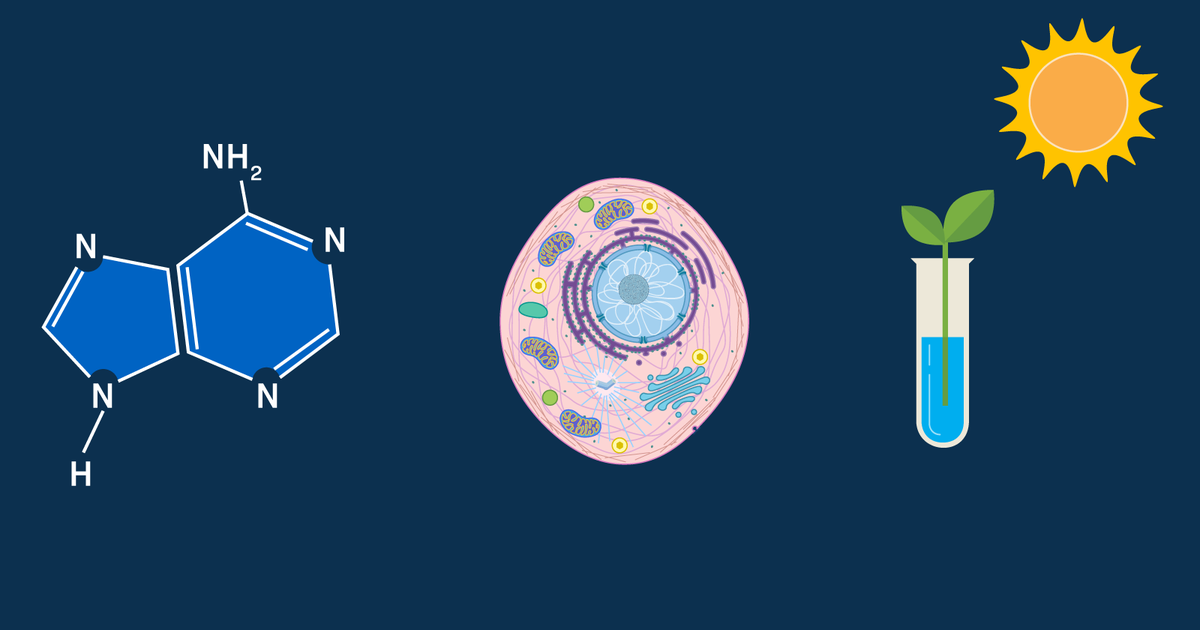
AP® Biology is an advanced, college-level course taught at the high school level that prepares students for introductory biology in college. The curriculum is organized into 8 units: Chemistry of Life, Cell Structure and Function, Cellular Energetics, Cell Communication and the Cell Cycle, Heredity, Gene Expression and Regulation, Natural Selection, and Ecology. This cluster focuses on the first 3 units, which form the biochemical and cellular foundation for all other topics in the course: Unit 1: Chemistry of life — explores the chemical principles and properties of molecules essential for life, including water, macromolecules, and the relationship between molecular structure and function. Unit 2: Cell structure and function — examines the organization of prokaryotic and eukaryotic cells, the role of organelles, and the importance of membranes in maintaining homeostasis. Unit 3: Cellular energetics — investigates how cells transform energy, covering topics such as enzymes, photosynthesis, and cellular respiration. Throughout these units, students engage in inquiry-based investigations from the AP® Biology Lab Manual, practicing essential laboratory skills and applying their knowledge to solve real-world biological problems. Emphasis is placed on critical thinking, data analysis, and application-based assessments that mirror the rigor of college-level coursework. Soon, we’ll be adding a new enzyme lab investigation to this cluster, allowing learners to further explore these essential interactions in biology. Stay tuned! AP® is a registered trademark of the College Board, which has not reviewed this resource.
Topics
- active transport
- adhesion
- aerobic respiration
- against concentration gradient
- allosteric inhibition
- allosteric inhibitor
- allosteric site
- amino acid
- amino acid residue
- amino acids
- anaerobic respiration
- animal cell
- AP
- AP Bio
- AP Biology
- aquaporin
- aquapore
- ATP
- bacteria cell
- bilayer
- biochem
- biological macromolecule
- biomolecules
- bulk transport
- Calvin cycle
- carbohydrate
- carbohydrates
- carbon
- catalyst
- cell
- cell energy
- cell energetics
- cell membrane
- cell size
- cell transport
- cell wall
- cellular energetics
- cells
- chemistry of life
- charged molecules
- chloroplast
- cholesterol
- citric acid cycle
- cofactor
- cohesion
- compartmentalization
- competitive inhibition
- competitive inhibitor
- concentration gradient
- diffusion
- dissolve
- DNA
- deoxyribonucleic acid
- electronegativity
- endocytosis
- endomembrane system
- endoplasmic reticulum
- endosymbiosis
- environmental variable
- enzyme activity
- enzyme-substrate complex
- enzymes
- eukaryote
- eukaryotic
- exocytosis
- facilitated diffusion
- fatty acid
- fermentation
- first law of thermodynamics
- function
- functional groups
- glycerol
- glycolysis
- Golgi body
- high pH
- high specific heat
- high temperature
- homeostasis
- hydrogen bond
- hydrogen bonding
- hydrogen bonds
- hydrogen peroxide
- hydrophilic
- hydrophobic
- hypertonic
- hypotonic
- hydrolysis
- ions
- ionic bonds
- isomers
- isotonic
- IV fluids
- kinetic energy
- Kreb cycle
- leaf disk assay
- light-dependent reaction
- light-independent reaction
- line graph
- lipid bilayer
- lipids
- liquid
- living things
- low pH
- low temperature
- macromolecules
- membrane protein
- microrespirometer
- mitochondria
- monomer
- monosaccharide
- net flow
- next generation science standards
- NGSS
- nitrogen
- noncompetitive inhibition
- noncompetitive inhibitor
- nonpolar
- nucleic acids
- nucleotide
- nucleotides
- optimal pH
- optimal temperature
- organelle
- organelles
- osmoregulation
- osmolarity
- osmosis
- oxygen
- passive transport
- pepsin
- pH
- phagocytosis
- phospholipid
- phospholipids
- phosphorylation
- phosphorous
- photosynthesis
- pinocytosis
- plant cell
- plasma membrane
- polarity
- polar
- polymer
- polysaccharide
- potassium pump (sodium-potassium pump)
- R group
- reaction rate
- receptor-mediated endocytosis
- red blood cells
- ribonucleic acid
- ribosomes
- RNA
- second law of thermodynamics
- secretory pathway
- selective permeability
- semipermeable membrane
- solid
- sodium potassium pump
- solute
- spectrophotometer
- steroids
- structure
- subcellular components
- substrate
- substrate concentration
- sulfur
- surface tension
- temperature
- tonicity
- triglyceride
- unit 1
- unit 2
- unit 3
- universal solvent
- water
- water properties