Scientific Reasoning
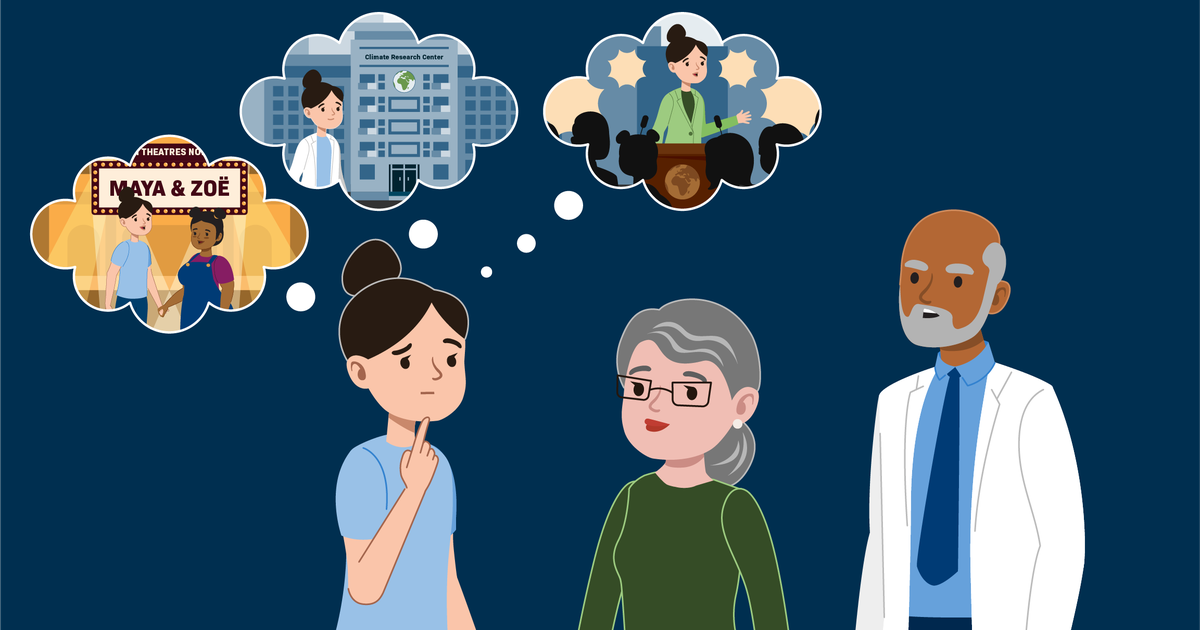
Unlike most living things, human beings are able to reason. We all intuitively understand how to reason and do it every day. Science is a highly refined and rigorous form of everyday reasoning. We can become better scientists and improve our day-to-day lives by learning to describe, analyze, and evaluate reasoning. This cluster leads learners on a guided tour through the essential ingredients of reasoning---claims, evidence, and arguments---and takes a deep dive into common cognitive biases and rational fallacies that impede our ability to reason as well as we can.
Topics
- absence of evidence
- abusive ad hominem
- accuracy rate
- ad hominem fallacy
- adding probabilities
- affirming a disjunct
- affirming the consequent
- anchoring bias
- anchoring heuristic
- application
- applying general principles
- argument
- argument form
- argument structure
- argumentation
- assurance
- audience
- availability bias
- availability heuristic
- bad argument
- bandwagon effect
- base rate
- base rate neglect
- behavior
- belief
- bias
- bias mitigation
- bias mitigation strategies
- bias trigger
- calculating probabilities
- calculation
- causal factor
- causal reasoning
- causal relationship
- causation
- cause-effect relationship
- chance
- chance of illness
- character
- cherry-picking
- chess tournament
- circumstances
- circumstantial ad hominem
- claims
- coercion
- cognitive bias
- coin flips
- combination of probabilities
- combining conditionals
- combining rules
- compulsion
- complex argument
- components of an argument
- Complement Rule
- conditional probability
- conditions
- confidence
- confidence level
- confirmation bias
- confirming
- conflicts of interest
- conjunction
- conjunction fallacy
- Conjunction Rule
- conjuncts
- constructing proofs
- controversial ideas
- co-occurring events
- correlation
- credibility
- critical thinking
- decoding
- decision-making
- decrease probability
- debiasing
- debiasing technique
- deduction
- deductive argument
- deductive reasoning
- deductive validity
- denying the antecedent
- dependent events
- dependent probabilities
- deriving logical consequences
- deriving predictions
- detecting bias
- detecting plagiarism
- detection
- detection system
- determining the cause
- diagrams
- direct perception
- disbelief
- disconfirming
- disconfirming evidence
- diverse perspectives
- diverse sample
- disjunctive syllogism
- dogma
- emotions
- emotional appeal
- essential content
- essential premise
- evaluating arguments
- events
- evidence
- evidence against a claim
- evidence for a claim
- experience
- expert
- expertise
- expertise creep
- explicit conclusion
- explicit premise
- eyewitness identification
- fair coin
- fallacies
- fallacies of irrelevant evidence
- fallacies of weak evidence
- fallacious argument
- fallacy
- false belief
- false cause fallacy
- false conclusion
- false negative rate
- false positive rate
- falsifying hypotheses
- fear
- force
- formal fallacy
- frequency of an event
- fundamental attribution error
- Galileo
- gambler's fallacy
- generalizing
- geocentrism
- good argument
- good evidence
- good reasoning
- groupthink
- hasty generalization fallacy
- heliocentrism
- heuristic thinking
- heuristics
- high school
- homogenous sample
- hypothesis
- hypothesis testing
- hypothetical syllogism
- illusions
- implicit conclusion
- implicit premises
- impossible outcomes
- improbable streaks
- increase probability
- independence
- independent events
- independent probabilities
- indirect perception
- intersection
- interpretation
- invalid
- invalid arguments
- invalidity
- irrelevant evidence
- isolating causal factors
- kinds of argument
- kinds of reasoning
- likelihood
- limits of deduction
- logic
- logical form
- logical symbol
- marble draws
- marbles
- manipulation
- mathematics of probability
- medical testing
- mental map
- mental shortcuts
- modeling
- modus ponens
- modus tollens
- motivated reasoning
- motivations
- multiple events
- mutually exclusive events
- necessity
- non-belief
- non-deductive argument
- non-deductive reasoning
- non-essential content
- non-experts
- observation
- odds
- optimism bias
- ordinary language argument
- outcomes
- overlapping possibilities
- overlapping probabilities