Local Interactions Determine Collective Behavior
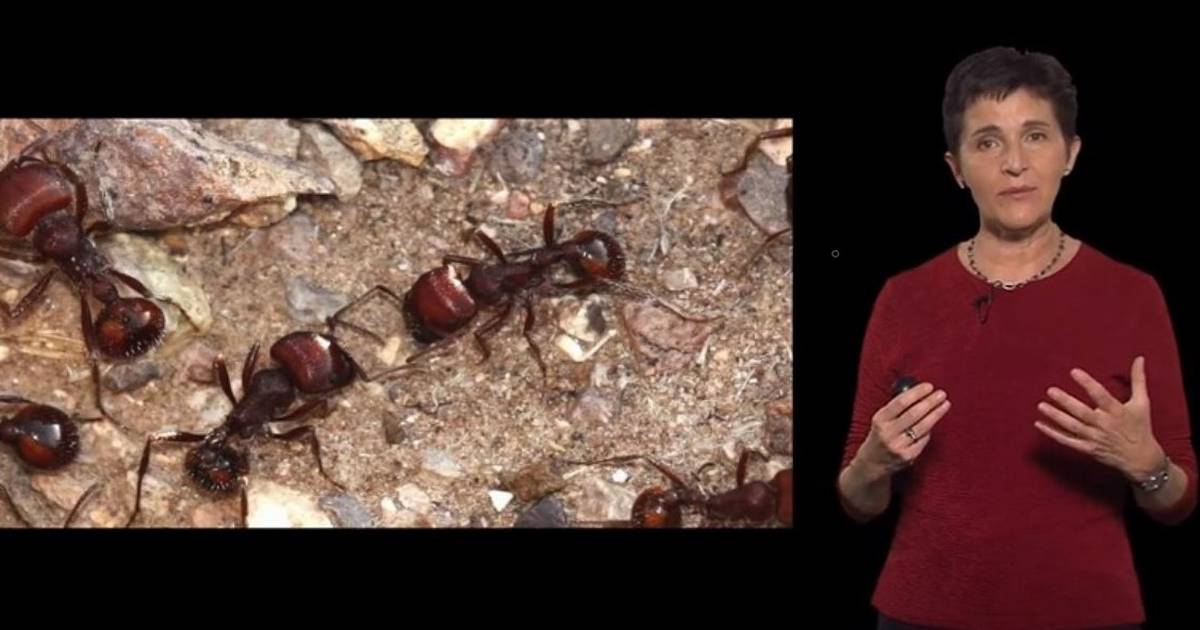
Examples of collective behaviors are all around us: in the movement of flocks of birds, the neural networks the produce perception and memory, and in engineered computer networks. Collective behavior operates without any central control; instead, behavior is regulated via networks of local interactions. In Part 1 of this talk, Dr. Gordon (Stanford) explains that an ant colony is an excellent example of collective behavior since local interactions between individual ants determine the behavior of the whole colony. Studying harvester ants, Gordon investigates how, without any direction or instructions, colonies adjust the number of ants engaged in each colony task, in response to a changing environment and the needs of the colony. This “task allocation” is regulated by interactions, such as brief antennal contacts, among individual ants. Harvester ants live in the desert so they face an ongoing challenge of conserving water. Colonies must spend water to get water: foragers lose water searching for seeds in the hot sun, but obtain water by metabolizing water from the fats in the seeds.
Topics
- collective behavior
- networks
- central control
- local interactions
- ants
- ecology
- evolution