Prebiotic RNA Replication
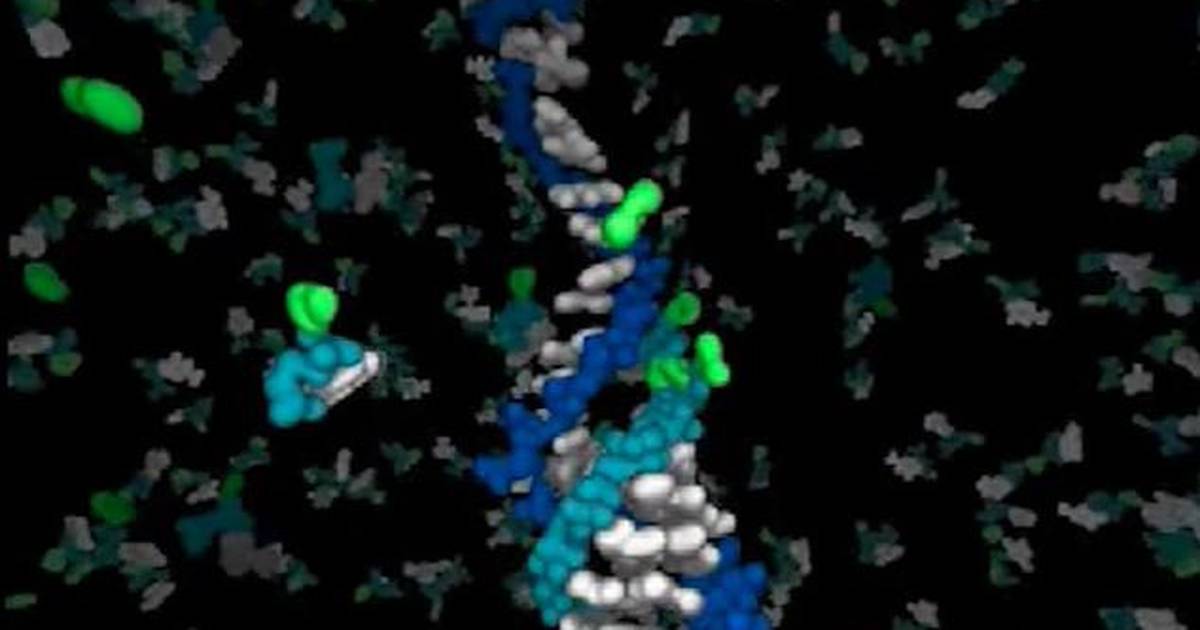
Even in the absence of enzymatic catalysts, single-stranded RNAs may have been able to copy strands of RNA through template-directed polymerization. This process is shown in the animation below, and is based on experiments performed in Jack Szostak's Lab (MGH/Harvard) using chemically activated nucleotides. This process of non-enzymatic replication, however, is likely to have been slow and error-prone. Eventually, this mechanism of RNA replication is likely to have been replaced by a more reliable catalyst, such as a ribozyme. Scientists hypothesize that a ribozyme that was capable of making copies of other RNAs, called a replicase, evolved very early in life's history. This animation shows the process of template-directed polymerization. This reaction is made possible by chemically activating the nucleotides, thereby increasing their reactivity.
Topics
- chemically activated nucleotides
- chemical activation
- template-directed polymerization
- polymerization
- RNA
- RNA replication
- neuclic acids
- neuclic