Secondary Messengers
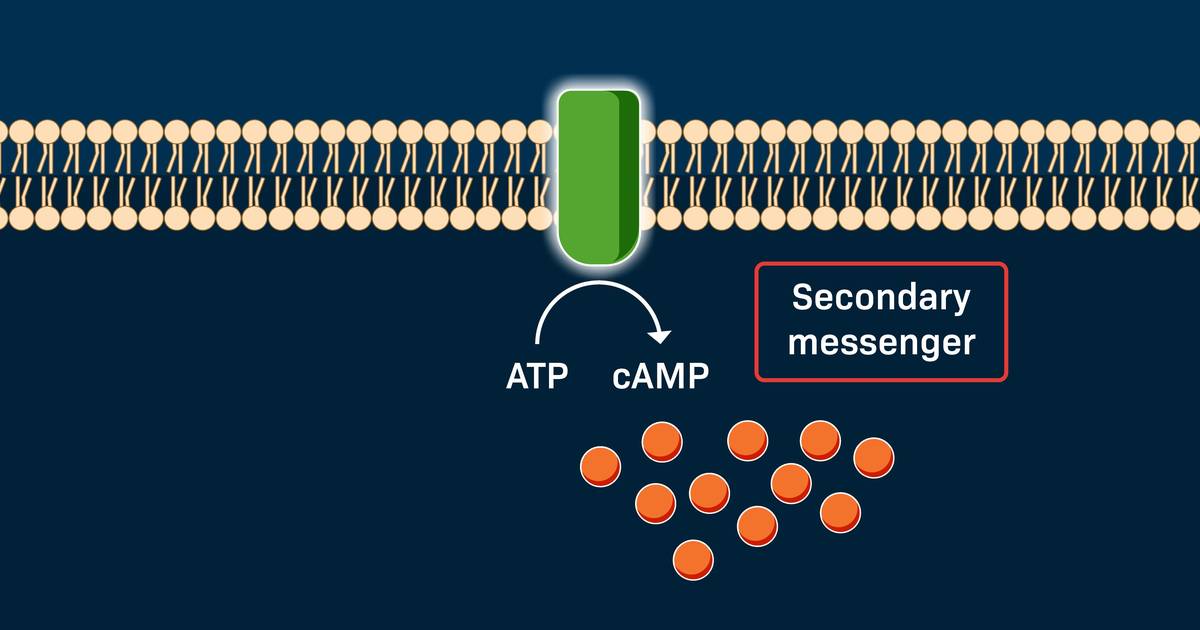
Secondary messengers are small molecules or ions within the cell that relay signals from receptor proteins on the cell surface to internal targets, leading to a cellular response. They’re called “secondary” because they act after the “primary” messenger—an external signal like a hormone or growth factor—binds to a receptor to start the signaling process.
Topics
- AP
- AP Biology
- AP Bio
- next generation science standards
- NGSS
- Fight-or-flight response
- cell signaling
- adrenaline
- adrenergic receptor
- signaling molecule
- signaling cascade
- phosphate
- phosphorylation cascade
- phosphorylation
- kinase
- PKA
- phosphodiesterase
- second messenger
- secondary messenger
- cyclic AMP
- cAMP
- cGMP
- IP3
- DAG
- NO
- calcium ions
- Ca2+
- phosphatase
- signal transduction
- cell division
- signal amplification
- signal reception
- reception
- transduction
- cellular response
- protein structure
- conformational change
- protein shape
- structural change
- activation
- signal interruption
- signal termination
- signal relay