Gram-Positive vs. Gram-Negative Bacteria
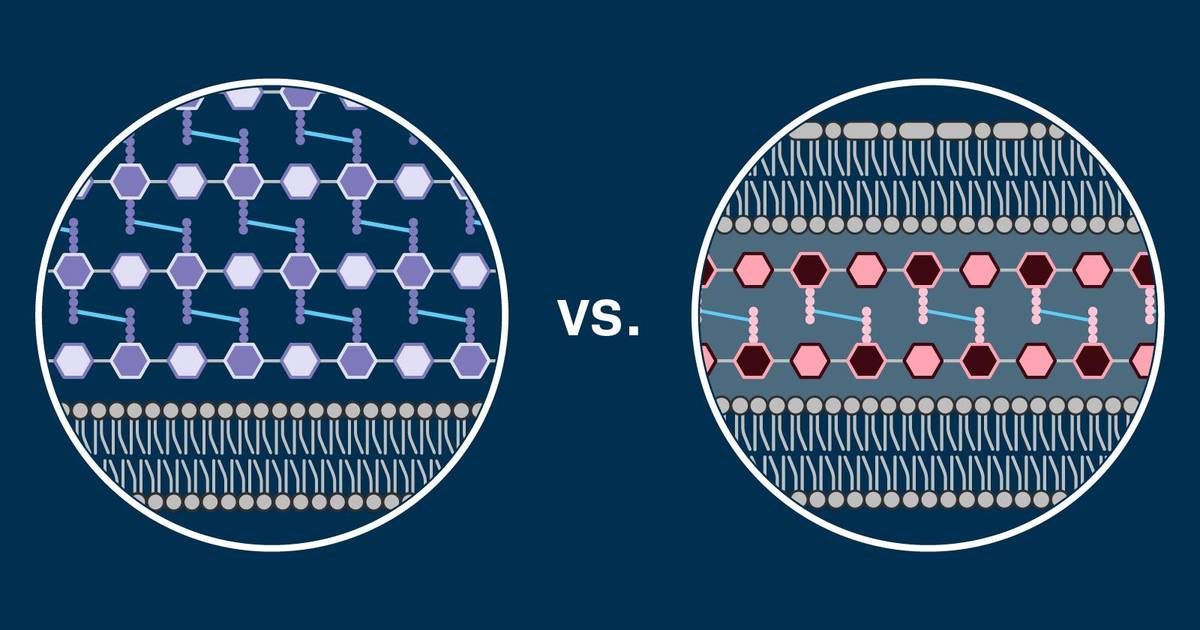
Gram-positive and Gram-negative bacteria are distinguished by important differences in cell wall structure that influence how they respond to antibiotics. This scrollable interactive explores the structural differences between these two bacterial groups, including the thick, exposed peptidoglycan layer of Gram-positive bacteria and the thinner peptidoglycan layer of Gram-negative bacteria, which is protected by an additional outer cell membrane. Explore how these structural features affect antibiotic action and contribute to antibiotic resistance.
References
Romaniuk JAH, Cegelski L. Peptidoglycan and Teichoic Acid Levels and Alterations in Staphylococcus aureus by Cell-Wall and Whole-Cell Nuclear Magnetic Resonance. Biochemistry. 2018 Jul 3;57(26):3966-3975. doi: 10.1021/acs.biochem.8b00495. Epub 2018 Jun 11. PMID: 29806458; PMCID: PMC6309457.
Topics
- antibiotic resistance
- antibiotics
- AP
- AP Biology
- AP Bio
- bacteria
- bacterial cell wall structure
- bacterial cell walls
- beta-lactamase
- cell membrane
- cytoplasmic cell membrane
- efflux pumps
- eukaryotic cell
- Gram stain
- Gram-negative bacteria
- Gram-positive bacteria
- glycans
- immune system
- lipopolysaccharides (LPS)
- lipoteichoic acids (LTAs)
- next generation science standards
- NGSS
- outer cell membrane
- outer membrane proteins (OMPs)
- penicillin
- peptides
- peptidoglycan
- peptidoglycan synthesis
- periplasmic space
- porins
- prokaryotic cell
- teichoic acids