How Does Complexity Arise From Molecular Interactions?
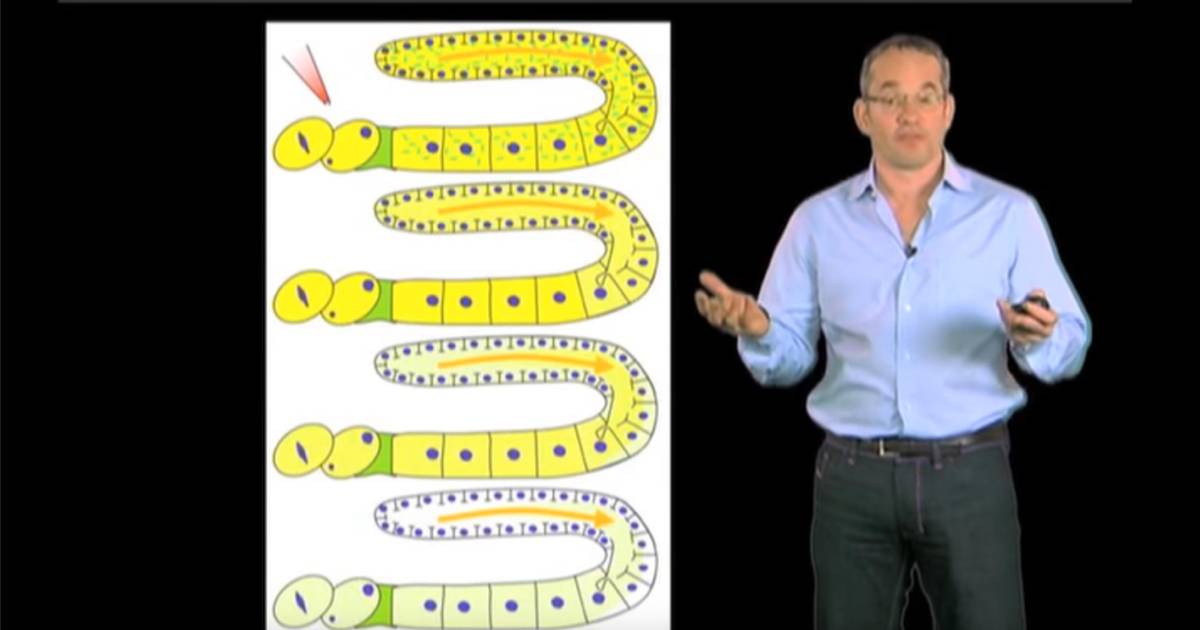
A eukaryotic cell is often 5-6 orders of magnitude larger than the molecules that make it up. How is it that these molecules interact to organize the complex structures that constitute a cell? In part 1 of his seminar, Dr. Hyman (Max Planck Institute) explains how cell division in a C. elegans embryo provides an excellent model for organization of cellular structures and processes and how RNA interference (RNAi) is an extremely useful tool to study this model. He describes how individual proteins can form complexes of varying size and complexity. Complexes can then organize to form compartments, or non-membrane bound organelles such as centrosomes or the cell cortex, and the organization of these compartments drives the organization of cells.
Topics
- cytoplasm
- complexity
- eukaryotic
- C. elegans
- embryo
- cell division
- cellular structures
- RNAi
- RNA interference
- complexes
- compartments
- centrosomes
- cell cortex