Sex-linked Modes of Inheritance
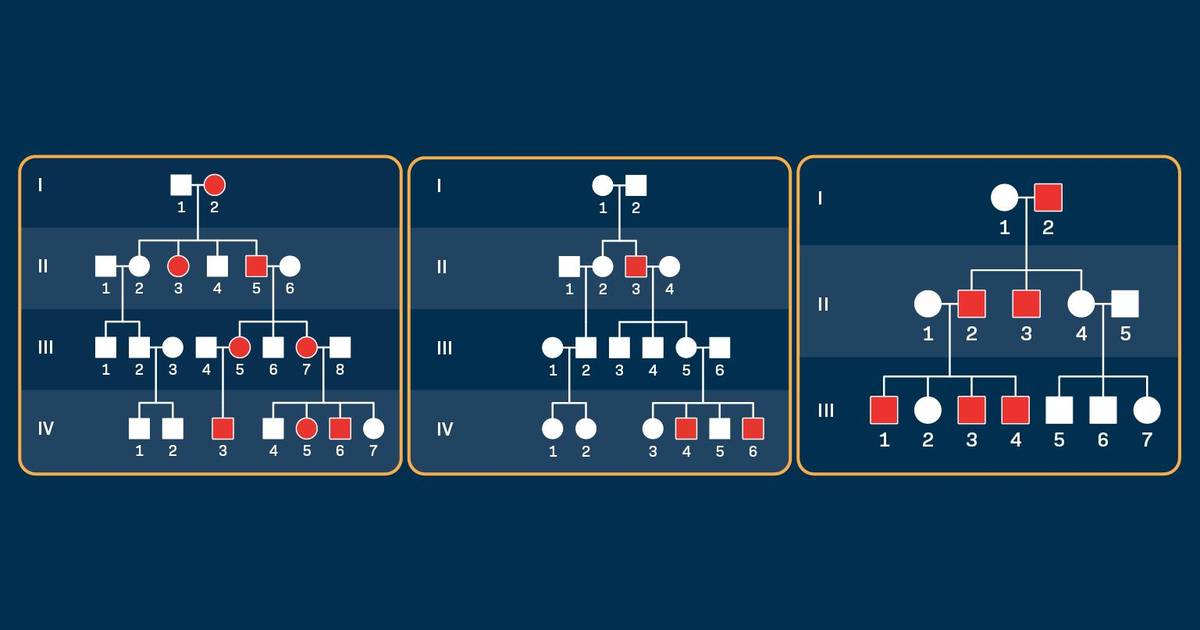
Traits or conditions that are determined by genes located on sex chromosomes follow a sex-linked mode of inheritance. There are 3 sex-linked modes of inheritance: X-linked dominant, X-linked recessive, and Y-linked. In this scrollable interactive, you’ll examine pedigrees and explore the key characteristics that distinguish each of these inheritance patterns.
Topics
- affected female
- affected individual
- affected male
- allele
- biological parent
- carrier
- dominant
- Duchenne muscular dystrophy
- female biological parent
- female child
- fragile X syndrome
- gene
- generation
- genetic condition
- genetic trait
- hemophilia A
- heterozygous
- homozygous
- incontinentia pigmenti
- inheritance
- male biological parent
- male child
- male offspring
- maleness
- offspring
- phenotype
- recessive
- red-green color blindness
- sex chromosome
- SRY gene
- trait
- unaffected female
- unaffected individual
- unaffected male
- vitamin D-resistant rickets
- webbing finger
- webbing toes
- X chromosome
- X sex chromosome
- X-linked
- X-linked condition
- X-linked dominant
- X-linked dominant condition
- X-linked dominant trait
- X-linked hypophosphatemia (XLH)
- X-linked recessive
- X-linked trait
- Y chromosome
- Y sex chromosome
- Y-linked
- Y-linked allele
- Y-linked condition
- Y-linked trait