Explore COVID Transmission Using Networks
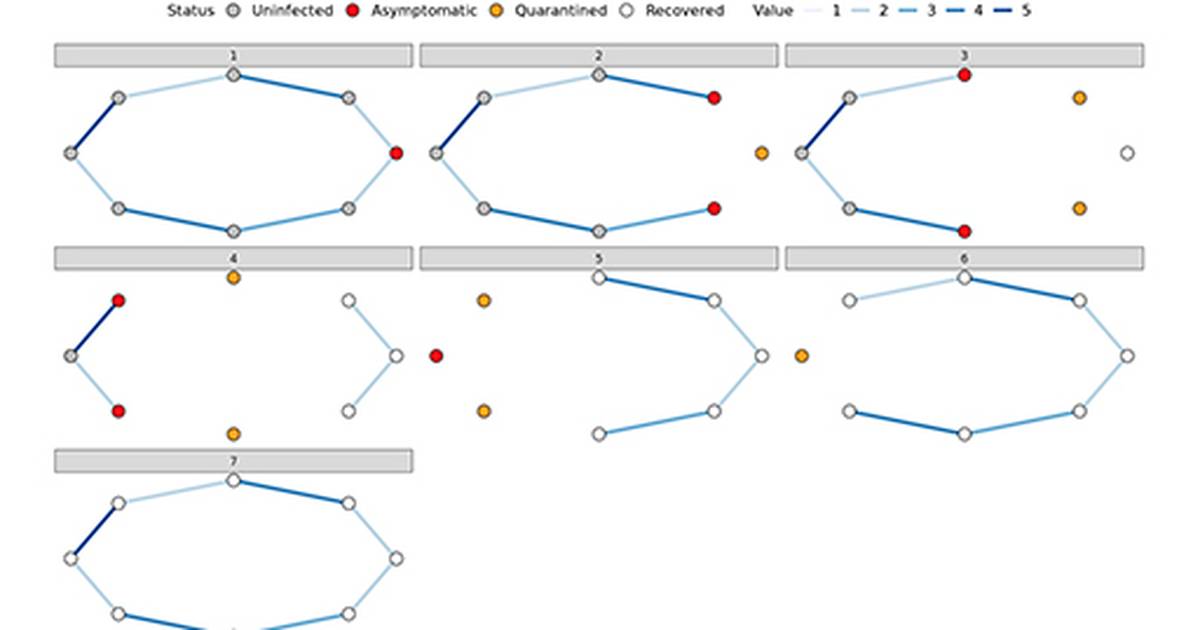
Simulate the effect of social distancing policies on virus transmission, the economy, and income inequality. In this simulation, we use a simple network to represent the population. Each individual is a node and is connected to a fixed number of other individuals, from whom he/she can catch or transmit the virus. You can use the interactive sliders to change characteristics of the network or the virus (population size, probability of infection, number of connections between individuals, and the number of connections broken via social distancing policies) and see how that changes the number of cases, economic cost, and income inequality over time. You can also compare the outcomes under social distancing with outcomes when no virus mitigation measures are undertaken.
Topics
- COVID-19