Hemoglobin: Allosteric Regulation by BPG
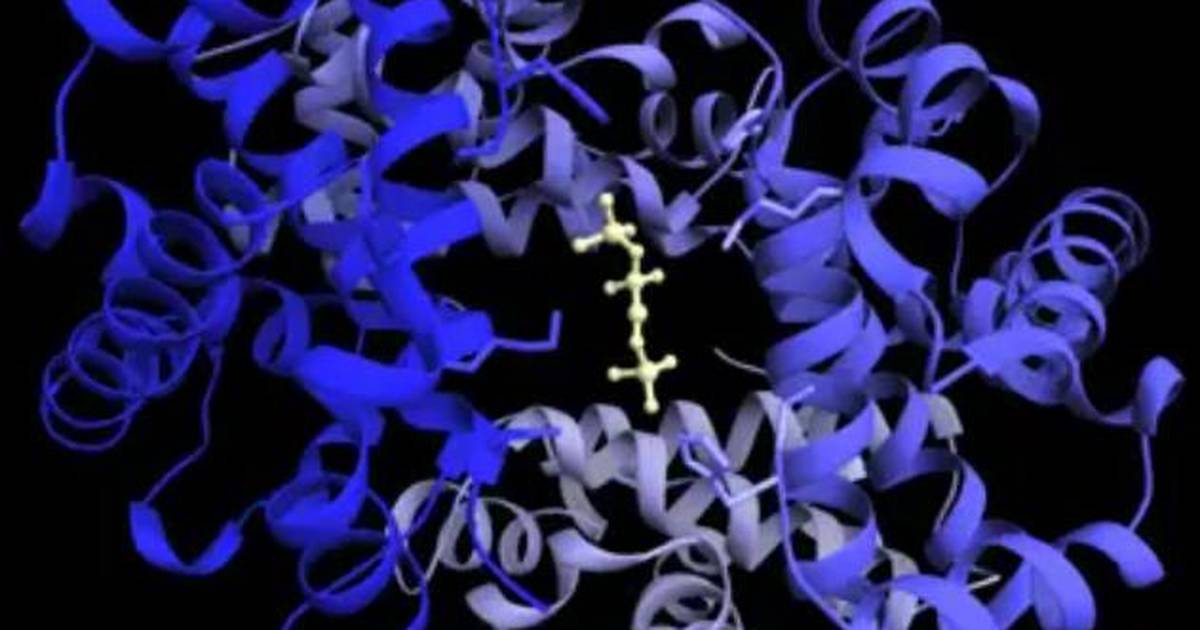
One allosteric regulator of hemoglobin's T (tense) to R (relaxed) transition is 2,3-bisphosphoglycerate (BPG). As shown in this animation, 2,3-BPG can bind in the central pocket of hemoglobin when hemoglobin is in the T state. Binding of 2,3-BPG is mediated by a rosette of amino acid side chains from both beta subunits. By this mechanism, 2,3-BPG stabilizes the T state and lowers the affinity of hemoglobin for oxygen. Upregulation of 2,3-BPG increases the delivery of oxygen to tissues in low-oxygen conditions. Protons are also an important allosteric effectors of hemoglobin. At relatively low pH (such as in respiring muscle tissues), hemoglobin has a lower affinity for oxygen than it does at higher pHs (such as in the lung tissue).
Topics
- bisphosphoglycerate
- BPG
- allostery
- allosteric effectors
- hemoglobin
- T to R
- transition