Nondisjunction in Meiosis
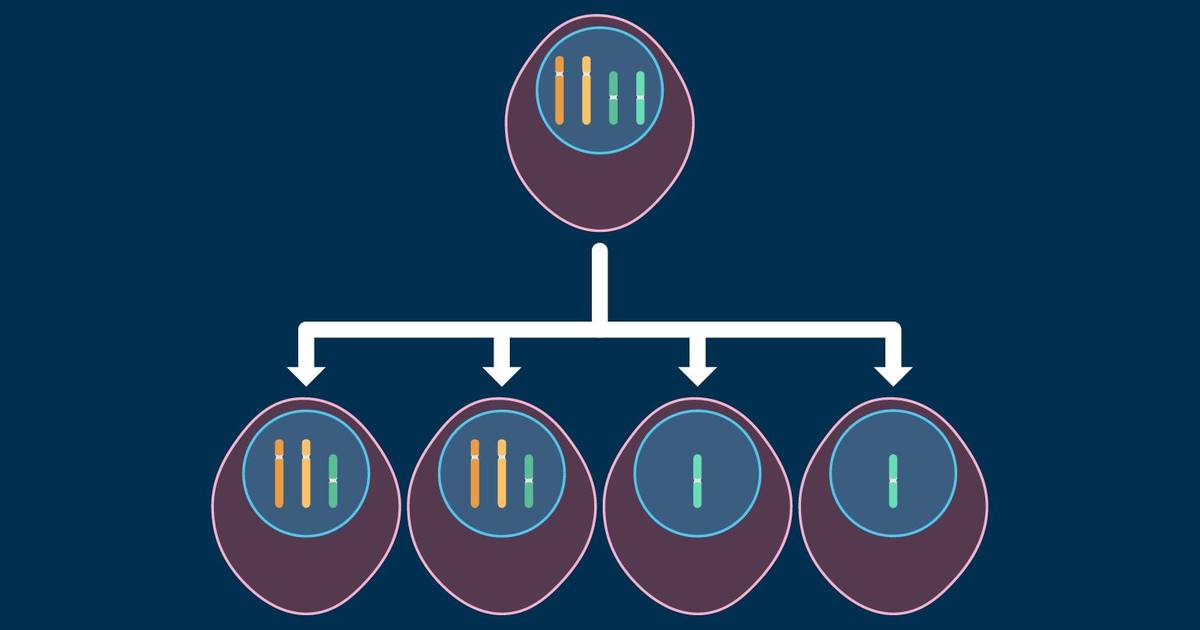
Nondisjunction occurs when a pair of homologous chromosomes (or homologs) don’t separate properly during meiosis I, or when sister chromatids don’t separate properly during meiosis II. This animation provides an overview of nondisjunction during meiosis I and meiosis II. To learn more about meiosis before diving into nondisjunction, visit the Meiosis in Animal Cells scrollable interactive or the The Phases of Meiosis video.
Topics
- 2n
- 2n + 1
- 2n − 1
- anaphase
- anaphase I
- anaphase II
- aneuploidy
- animal cell
- diploid
- DNA
- cell
- cell division
- chromosome
- chromosome number
- Down syndrome
- fertilization
- gamete
- germ cell
- haploid
- homologous chromosomes
- homologs
- meiotic division
- meiosis
- meiosis I
- meiosis II
- monosomic
- monosomy
- n
- n + 1
- n − 1
- nondisjunction
- reproductive cell
- sister chromatids
- spindle poles
- trisomic
- trisomy
- trisomy 21
- zygote