Evolution and Cancer
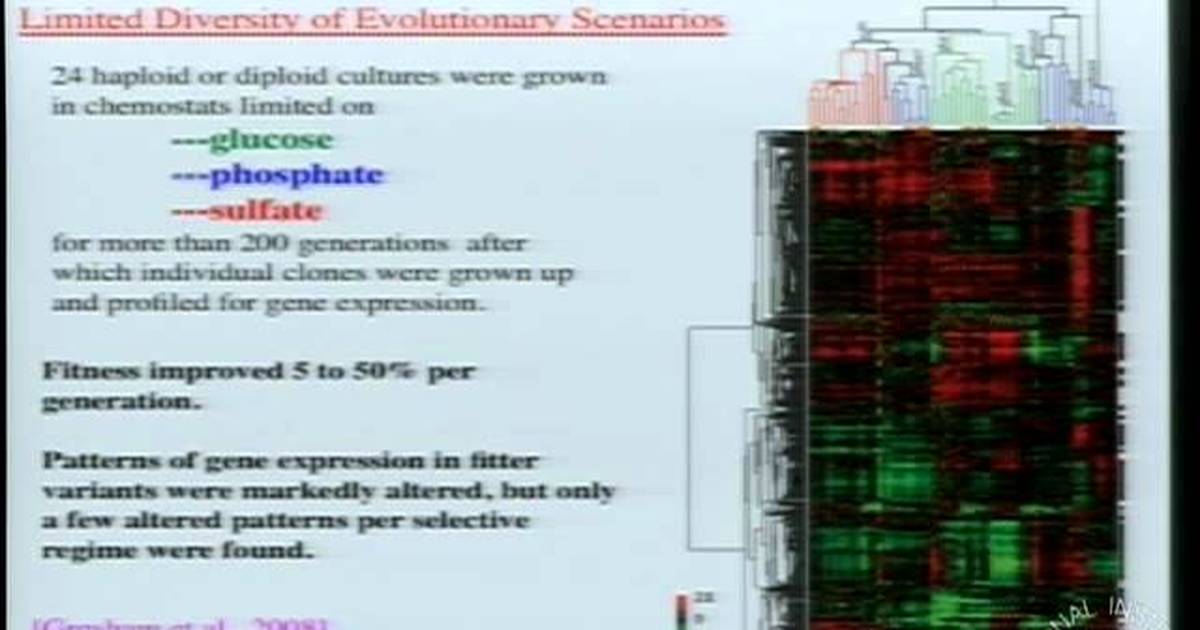
There is a broad consensus that cancer is the result of somatic cells having serially gained, by a series of mutations, the ability to grow independently, to recruit resources from the circulation and the stroma, to invade local tissues, and to found anatomically distant metastases, ultimately killing the host. From the point of view of the cancer-causing somatic cell population, this is evolution driven by mutation and selection. Genomics has resulted in a parallel consensus that the central functions of all eukaryotes are highly conserved, not only at the level of individual protein functions, but also complex biological pathways and systems. These ideas motivated a comparison between results of molecular genetic studies of experimental evolution in yeast and the molecular genetic phenomena associated with tumorigenesis and tumor progression. We find some very striking similarities, including recurring genomic rearrangements, alterations of the regulation of specific growth-promoting genes, population-genetic features that affect the fitness trajectories of growth rate variants in evolving populations, and physiological and metabolic similarities derived from the conservation of the basic plan of growth and cell multiplication among all eukaryotes. It is hoped that some of the insights from yeast will aid the interpretation of sequence changes found in tumors, especially in the urgent necessity to distinguish 'driver' from 'passenger' mutations." David Botstein's fundamental contributions to modern genetics include the development of genetic methods for understanding biological functions and the discovery of the functions of many yeast and bacterial genes. In 1980, Botstein and three colleagues proposed a method for mapping human genes that laid the groundwork for the Human Genome Project. The basic principle of the mapping scheme was to develop, by recombinant DNA techniques, random single-copy DNA probes capable of detecting DNA sequence polymorphisms when hybridized to restriction digests, or specific fragments, of an individual's DNA. The method was used in subsequent years to identify several human disease genes, such as Huntington's and BRCA1. Variations of this method enabled the sequencing phase of the Human Genome Project. In the 1990s Botstein, having moved to Stanford University School of Medicine, collaborated with Patrick O. Brown of Stanford in exploiting DNA microarrays to study genome-wide gene expression patterns in yeast and in human cancers. This required developing a new statistical method and graphical interface, widely used today to interpret genomic data. Botstein also has helped to create, with Michael Ashburner and Gerald Rubin, a bioinformatics initiative to unify the representation of gene and gene product attributes across all species, called Gene Ontology.
Topics
- gene expression
- mapping
- DNA
- mutations
- cell multiplication
- somatic cells
- cancer
- growth-promoting genes