Sex Determination in Humans
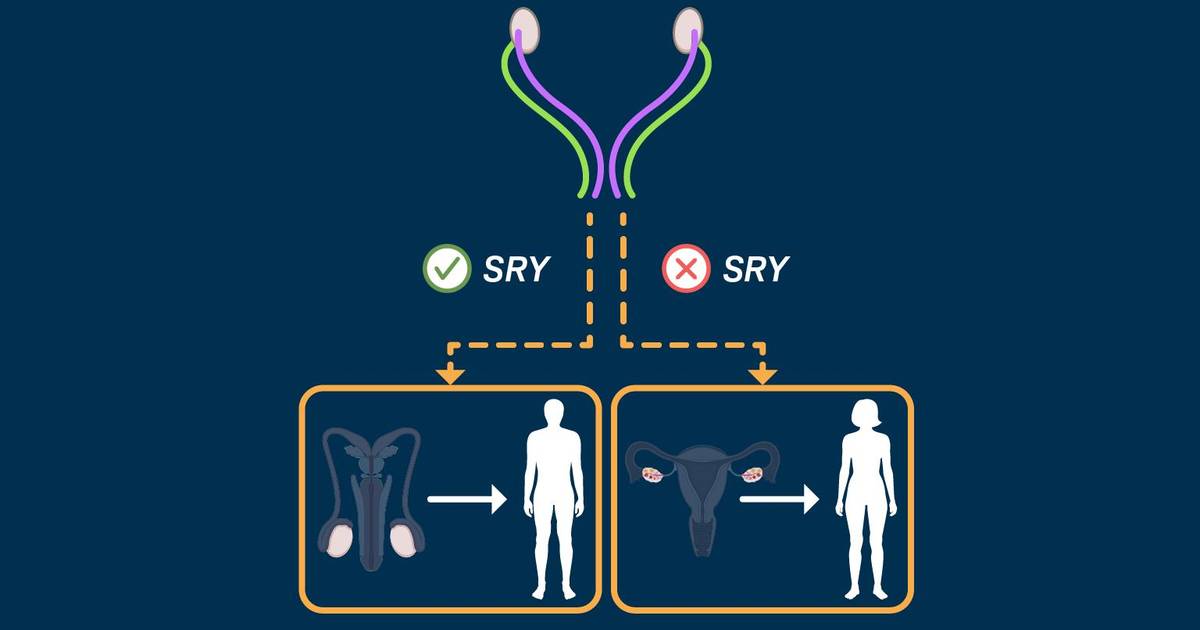
Explore how biological sex is determined in humans by learning about the role of the X and Y sex chromosomes as well as that of the sex-determining region Y (SRY) gene. You’ll also examine the sexual phenotypes of an individual with an abnormal number of sex chromosomes.
Topics
- AMH
- aneuploidy
- anti-Müllerian hormone
- autosomes
- biological sex
- chromosomal sex determination system
- chromosomal variations
- chromosomes
- estrogen
- female
- female reproductive system
- female sexual phenotype
- fertilization
- gene
- genetic condition
- genetic sex
- gonads
- homologous
- hormones
- humans
- Jacob syndrome
- Klinefelter syndrome
- male
- male reproductive system
- male sexual phenotype
- male-specific region of the Y chromosome
- meiosis I
- MSY
- nonsex chromosomes
- ovaries
- PARs
- pseudoautosomal regions
- reproductive ducts
- reproductive organs
- sex
- sex chromosomes
- sex determination
- sex determination system
- sex reversal
- sex-determining region of Y
- sexual differentiation
- sexual phenotype
- SRY
- SRY gene
- SRY protein
- testes
- testosterone
- Turner syndrome
- undifferentiated gonads
- X
- X chromosome
- XX
- XX male
- XX-XY
- XY
- XY female
- XYY
- Y
- Y chromosome