Eukaryotic Chromosome Compaction
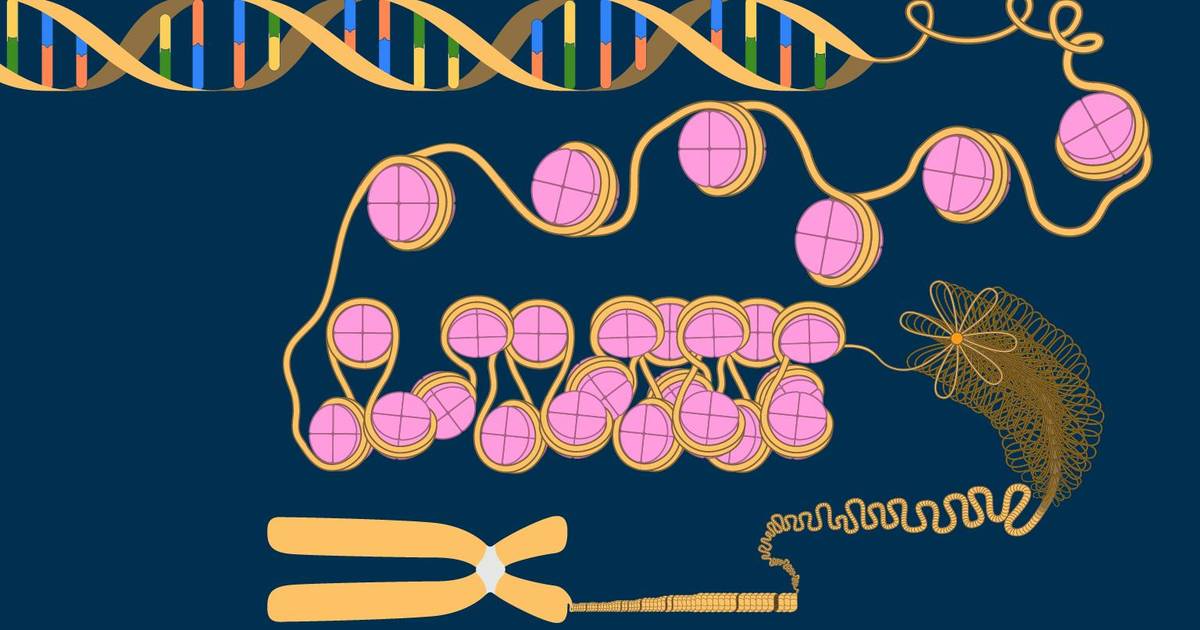
Explore the key structural features of the different levels of compaction for a eukaryotic chromosome in this interactive infographic.
Topics
- 3’ end
- 5’ end
- 10 nanometers
- 10 nm
- 10-nm fiber
- 20 bp
- 147 bp
- 30 nanometers
- 30 nm
- 30-nm fiber
- 250 nm
- 300 nm
- 300-nm fiber
- 700 nm
- 1400 nm
- band
- base pairs
- bp
- A-T base pair
- adenine
- antiparallel
- base pair
- C-G base pair
- centromere
- chromatid
- chromatin
- chromatin fiber
- chromatin loops
- chromosome
- chromosome compaction
- chromosome separation
- compaction
- complementary base pair
- core histones
- covalent bond
- cytosine
- deoxyribonucleic acid
- deoxyribose sugar
- deoxyribose sugar-phosphate backbone
- diploid
- DNA double helix
- DNA loop
- DNA packaging
- DNA sequence
- DNA
- double helix
- eukaryotic chromosome
- eukaryotic chromosome compaction
- gene
- genetic information
- Giemsa stain
- G-banding
- guanine
- H1
- H2A
- H2B
- H3
- H4
- H bond
- histone
- human cell
- hydrogen bond
- linker DNA
- linker histone
- longer arm
- loci
- locus
- mitosis
- mitotic chromosome
- nitrogenous base
- nucleic acid
- nucleotide sequence
- nanometer
- nm
- nucleosome
- nucleotide
- nucleus
- nuclei
- p arm
- phosphate group
- polarity
- positively charged
- proteins
- protein scaffold
- q arm
- replicated chromosome
- shorter arm
- sister chromatids
- stain
- sugar-phosphate backbone
- thymine