Reverse-Transcribing Viruses
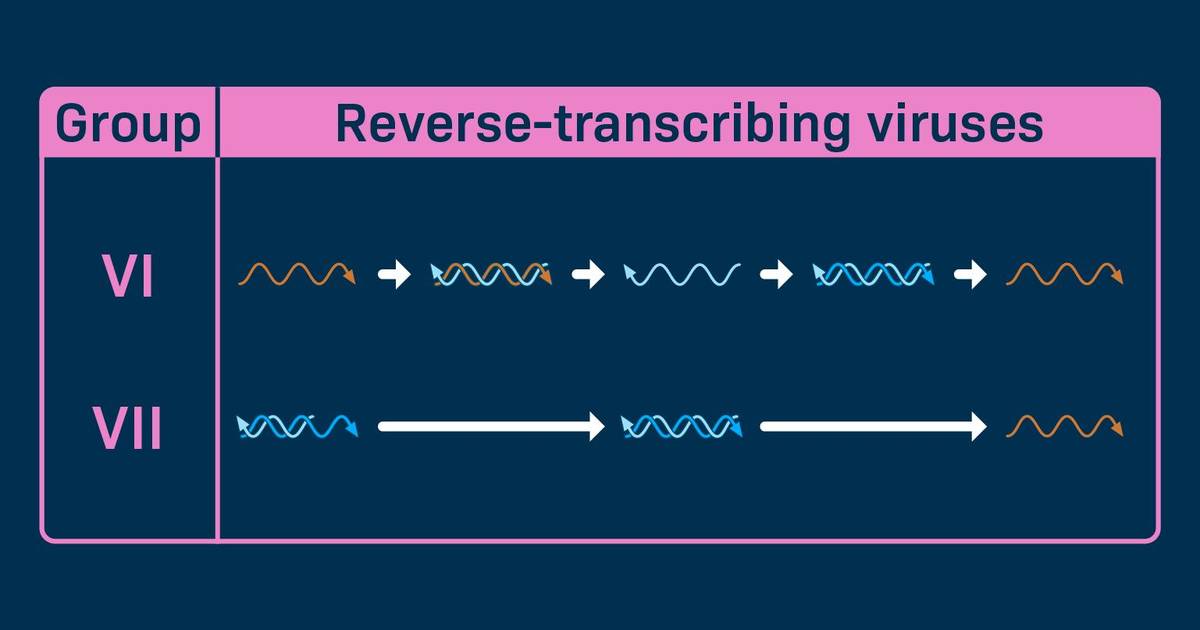
According to the Baltimore classification system for viruses, groups VI and VII are reverse-transcribing viruses, which replicate via reverse transcription. The viral genome is composed of (+)ssRNA (Group VI) or dsDNA (Group VII). This text explores how reverse-transcribing viruses transcribe their genome to produce viral proteins, and how they replicate their genome. It also includes examples of reverse-transcribing viruses that cause disease in humans.
Topics
- (+)ssRNA
- (−)ssRNA
- Baltimore classification
- Baltimore group
- capsid
- central dogma
- DdDP
- DdRP
- DNA virus
- DNA-dependent DNA polymerase
- DNA-dependent RNA polymerase
- dsDNA
- genome replication
- group VI virus
- group VII virus
- hepatitis B virus
- host cell machinery
- host cell
- human immunodeficiency virus
- human T-lymphotropic virus
- negative sense
- negative-sense RNA
- positive sense
- positive-sense RNA
- pregenomic RNA
- provirus
- RdDP
- retrovirus
- reverse-transcribing virus
- reverse transcriptase
- reverse transcription
- ribonuclease
- ribosome
- RNA virus
- RNA-dependent DNA polymerase
- RNase
- RT
- ssRNA
- transcription
- translation
- viral classification
- viral DNA
- viral genome
- viral mRNA
- viral protein
- virus