Fermi Detects First Gamma-Ray Pulsar in Another Galaxy
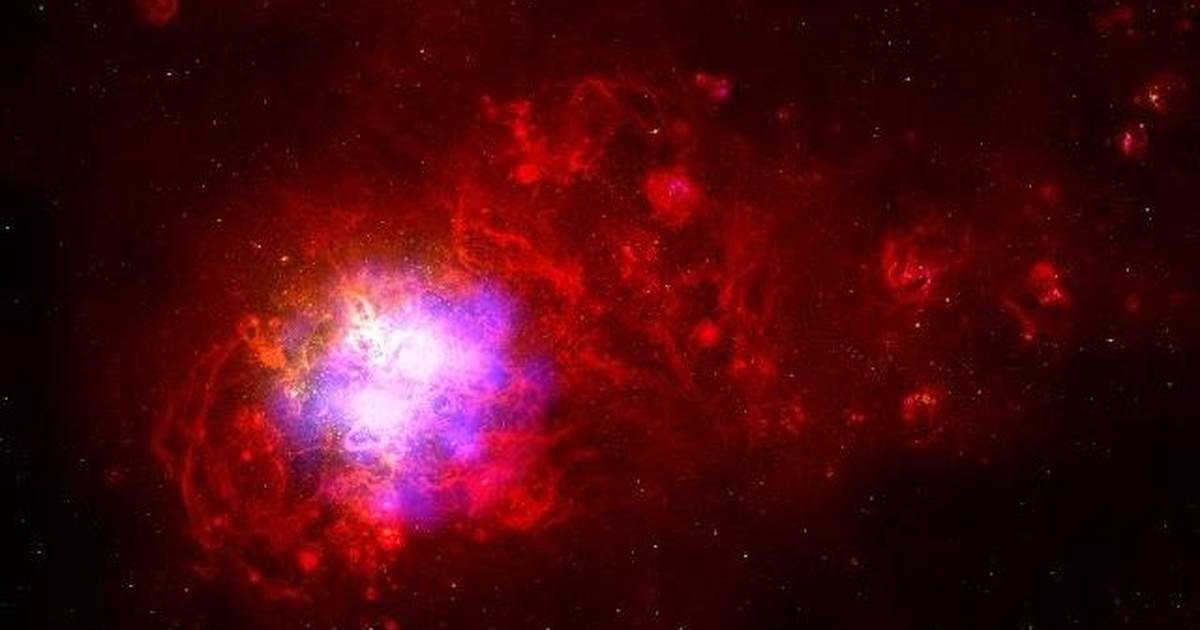
Researchers using NASA's Fermi Gamma-ray Space Telescope have discovered the first gamma-ray pulsar in a galaxy other than our own. The object sets a new record for the most luminous gamma-ray pulsar known. The pulsar lies in the outskirts of the Tarantula Nebula in the Large Magellanic Cloud, a small galaxy that orbits our Milky Way and is located 163,000 light-years away. The Tarantula Nebula is the largest, most active and most complex star-formation region in our galactic neighborhood. It was identified as a bright source of gamma rays, the highest-energy form of light, early in the Fermi mission. Astronomers initially attributed this glow to collisions of subatomic particles accelerated in the shock waves produced by supernovae. However, the discovery of gamma-ray pulses from a previously known pulsar named PSR J0540-6919 shows that it is responsible for roughly half of the gamma-ray brightness previously thought to come from the nebula. Gamma-ray pulses from J0540-6919 have 20 times the intensity of the previous record-holder, the pulsar in the famous Crab Nebula. Yet they have roughly similar levels of radio, optical and X-ray emission. Accounting for these differences will guide astronomers to a better understanding of the extreme physics at work in young pulsars.
Topics
- space telescope
- space exploration
- NASA
- pulsar
- neutron star
- Large Magellanic Cloud
- Tarantula Nebula
- Gamma ray
- Crab Nebula pulsar