Factors that Control Mitotic Division in Eukaryotic Cells
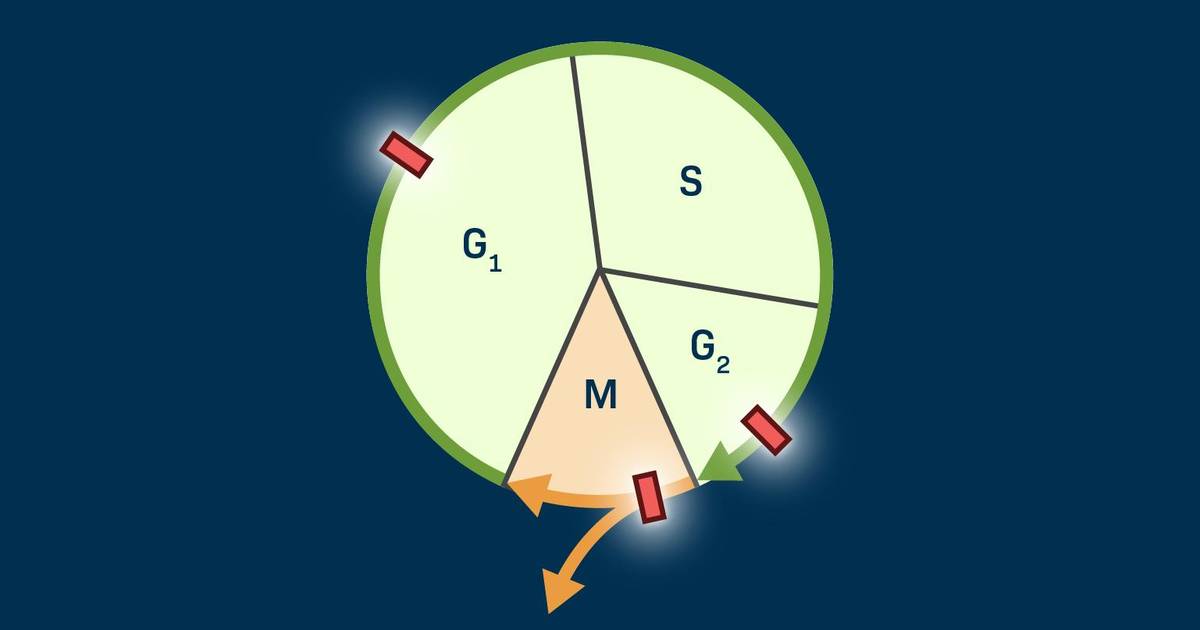
A eukaryotic cell’s progression through the cell cycle is tightly controlled, and can be inhibited at various checkpoints. This scrollable interactive explains how a cell makes decisions at each checkpoint in the cell cycle, and how cyclin-CDK protein complexes regulate cell cycle progression.
Topics
- adenosine diphosphate
- adenosine triphosphate
- ADP
- apoptosis
- ATP
- CDK
- cell cycle arrest
- cell cycle checkpoint
- cell cycle progression
- cell cycle
- cell division signal
- cell division
- cell growth
- checkpoint
- cyclin-CDK complex
- cyclin-dependent kinase
- cyclin
- DNA damage
- DNA synthesis
- eukaryotic cell cycle
- eukaryotic cell
- G0
- G0 phase
- G1
- G1 checkpoint
- G1 cyclin-CDK complex
- G1 cyclin-CDK
- G1 phase
- G2
- G2 checkpoint
- G2 cyclin-CDK complex
- G2 cyclin-CDK
- G2 phase
- gap 0 phase
- gap 1 phase
- gap 2 phase
- kinase
- liver cell injury
- liver cell
- M checkpoint
- M phase-promoting factor
- mitosis
- MPF
- nerve cell injury
- nerve cell
- nondividing state
- phosphate group donor
- phosphate group
- phosphate
- phosphorylation reaction
- phosphorylation
- programmed cell death
- restriction point
- S phase
- S
- signal
- synthesis phase