Crush Test
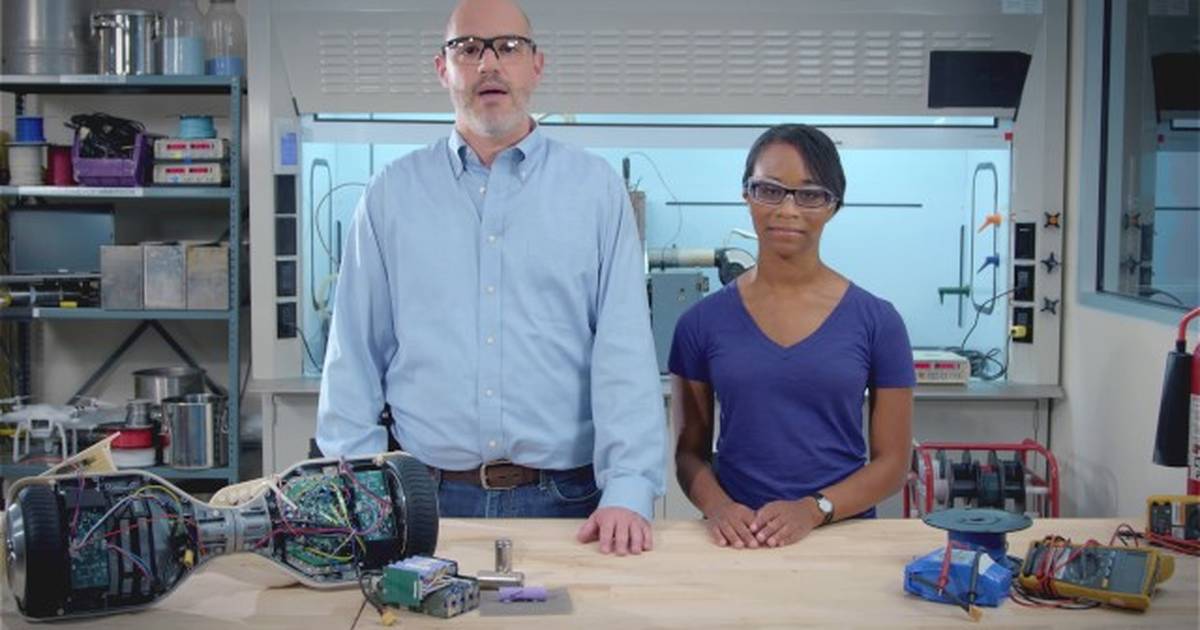
This test is known as the crush test. It determines how a battery will respond to extreme force -- in this case, pressure. Consider: In the real world, when might a battery be subject to pressure? Lithium-ion batteries are small and powerful. Behind this power is a volatile chemistry; if the anode and cathode of a lithium-ion battery make contact with each other inside the battery, an internal short circuit occurs and the chemicals can mix uncontrollably -- leading to thermal runaway. This can occur if the separator inside the battery is damaged. UL Safety Engineers push batteries to the extreme with a variety of tests designed to anticipate how a battery might be used or misused, evaluate potential dangers, analyze the effects of a fault or failure and engineer safer solutions. (Don't even consider trying this! Tests are done by trained professionals. Products are tested in a controlled environment with intent to fail.)
Topics
- short
- short circuit
- short-circuit
- circuit
- anode
- cathode
- force
- electronic
- electronics
- pressure
- fire
- failure
- risk
- testing
- engineering
- engineer
- laboratory
- thermal
- Battery
- battery safety
- batteries
- lithium-ion
- lithium ion
- lithium
- energy
- energy storage
- electrochemistry
- electricity
- electric
- device
- devices
- Portable
- Electrical
- Power
- Lab
- test
- thermal runaway
- experiment
- experiments