NASA’s Exoplanet Superheroes
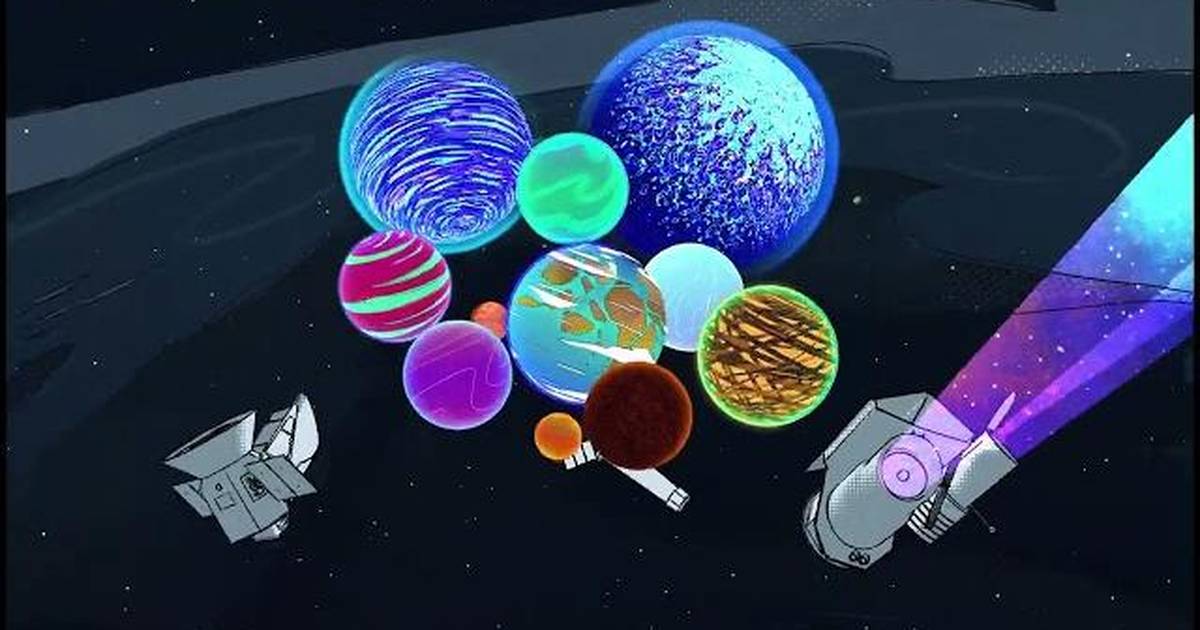
A superhero team of space telescopes works tirelessly to discover exoplanets and unveil their secrets. Now, a new superhero joins the team—the James Webb Space Telescope. What will it find? Hubble, Chandra, Spitzer, Kepler, TESS and now, the Webb telescope all have powers to discover exoplanets or to tell us more about them. Many of their abilities go far beyond detecting exoplanets. Hubble can look deep into the cosmic past, seeing light from the early universe and some of the most distant stars and galaxies. The Chandra X-ray Observatory examines the universe in X-rays. That has allowed it to peer into the tatters of exploded stars and the edges of our galaxy’s central, supermassive black hole. Another Great Observatory, the Spitzer Space Telescope, viewed the cosmos in infrared light, observing structural details of disks around stars and the faint glow of distant galaxies. Kepler and TESS, meanwhile, took on exoplanets as their main mission, both employing the transit method – searching for tiny dips in starlight as a planet crosses, or “transits,” the face of its star. Each telescope can reveal something different when studying the same planet. The James Webb Space Telescope will give us a closer look at exoplanets, and will be able to tell us something new. Credit: NASA/JPL-Caltech
Topics
- exploded stars
- supermassive black hole
- infrared light
- astronomy
- space exploration
- exoplanet discovery
- cosmic observations
- Hubble Space Telescope
- Chandra X-ray Observatory
- Spitzer Space Telescope
- TESS
- NASA
- infrared astronomy
- Webb telescope capabilities
- space telescopes
- exoplanets
- James Webb Space Telescope