Sanger Sequencing
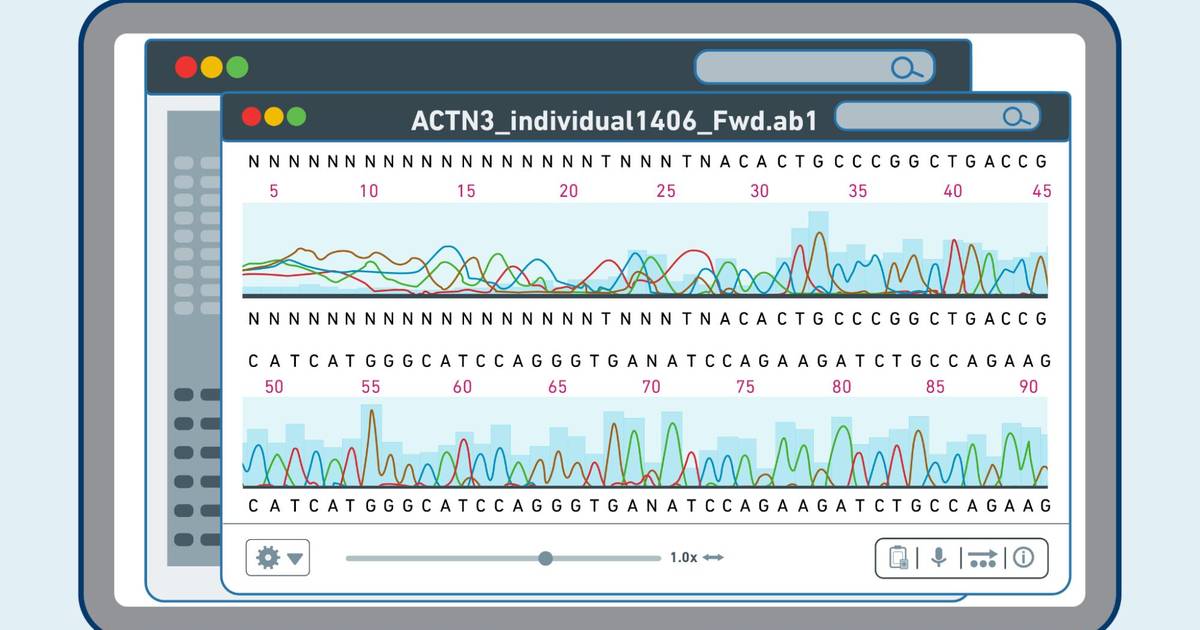
In this interactive, you will explore Sanger sequencing files to analyze genetic differences in human DNA. You will learn how to interpret sequencing data, assess its quality, and identify single nucleotide polymorphisms (SNPs) in the ACTN3 gene. This interactive is part of The Jackson Laboratory’s Teaching the Genome Generation™: Human Genetic Variation Virtual Lab curriculum that includes simulations and interactives for each experimental step of analyzing genotypes (or genetic variations) including DNA extraction, DNA amplification with PCR, and gel electrophoresis. After these steps, DNA sequencing can be used to analyze specific variants.
Topics
- ACTN3
- base calling
- bioinformatics
- chromatogram
- data interpretation
- DNA primers
- DNA sequencing
- gel electrophoresis
- genetic code
- genetic traits
- genetic variation
- genetic variants
- genotype
- genotype-phenotype connection
- gray bars (confidence indicators)
- high-quality sequence data
- heterozygous
- homozygous
- The Jackson Laboratory
- Jax
- low-quality sequence data
- molecular biology techniques
- nucleotide detection
- PCR (Polymerase Chain Reaction)
- phenotype
- Sanger sequencing
- scientific process
- sequencing files
- sequencing peaks
- sequence alignment
- sequence quality assessment
- sequence trimming
- sequence viewer software
- SNPs (Single Nucleotide Polymorphisms)
- teaching the genome generation: human genetic variation virtual lab (TtGG)