Cellular Reproduction
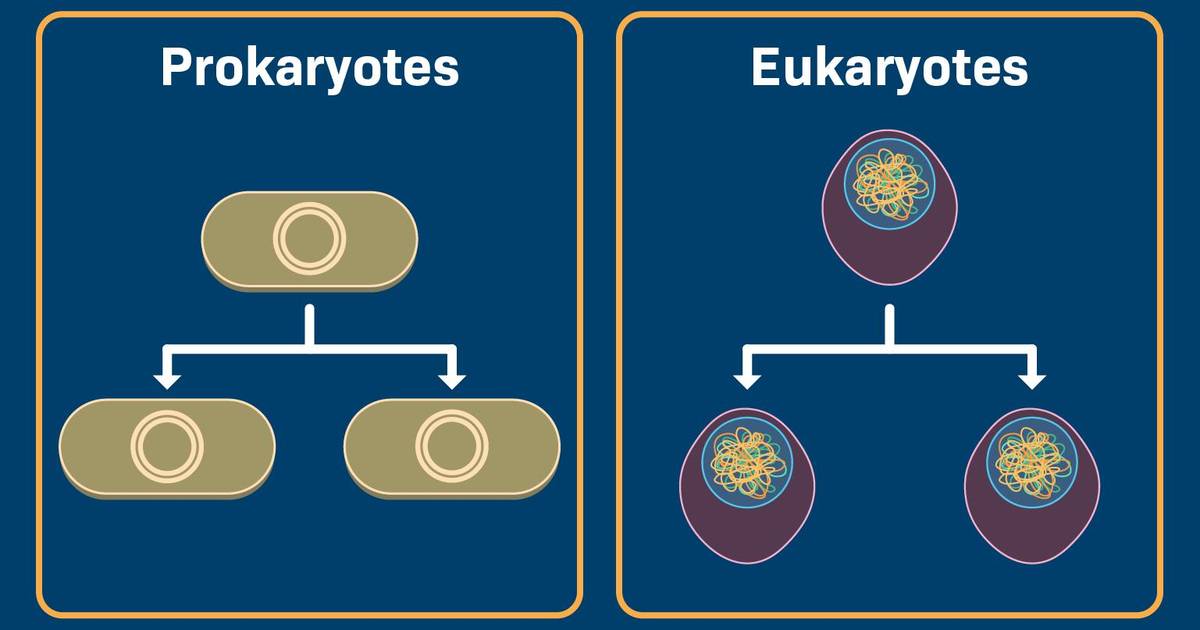
Heritable information provides the basis for the continuity of life. This pathway explores the process of cellular reproduction in prokaryotes and eukaryotes, and how genetic information is passed on to newly formed cells.
Topics
- actin
- anaphase
- archaea
- bacteria
- bacterial cell
- bacterial growth
- benzamide
- binary fission
- cell cycle checkpoint
- cell cycle phase
- cell cycle probability
- cell cycle
- cell division signal
- cell division
- cell growth
- cell reproduction
- centromere
- centrosome
- checkpoint
- chromosome change
- chromosome condensation
- chromosome structure
- chromosome
- circular chromosome
- cleavage furrow
- complement equation
- complement rule
- complement
- condensed chromosome
- contractile ring
- cytokinesis
- cytoplasmic division
- decondensed chromosome
- desired outcome
- dividing cell
- DNA content
- DNA replication
- DNA segregation
- early M phase cell
- early M phase
- environmental condition
- eukaryote
- eukaryotic cell cycle
- eukaryotic cell division
- eukaryotic cell
- eukaryotic chromosome
- FtsZ
- G0 cell
- G0 phase
- G0
- G1 cell
- G1 phase
- G1
- G2 cell
- G2 phase
- G2
- gap 0 phase
- gap 1 phase
- gap 2 phase
- genetically identical cells
- growth condition
- independent event
- interphase
- late M phase
- linear chromosome
- M phase
- meiosis
- metaphase
- mitosis
- mitotic phase
- myosin
- nuclear division
- nucleoid
- nucleus
- organelle duplication
- ori
- origin of replication
- outcome
- phases of the cell cycle
- possible outcome
- probability equation
- probability
- prokaryote
- prokaryotic cell division
- prokaryotic cell
- prometaphase
- prophase
- replicated chromosome
- S phase
- sister chromatids
- somatic cell
- synthesis phase
- telophase
- ter
- terminus of replication
- uncontrolled cell division
- unreplicated chromosome